04.1.2026
in Mounds Blog

April: National Pet First Aid Awareness Month

April is National Pet First Aid Awareness Month. Our pets are our family, our children, our guardians, our companions. Because of this special bond we share with them, it’s no surprise that we want to give them the best possible care we can. However, not many people know as much about animal first aid as they do human first aid. Our goal this month is to help spread awareness and knowledge of animal first aid for your little (or big) companion.

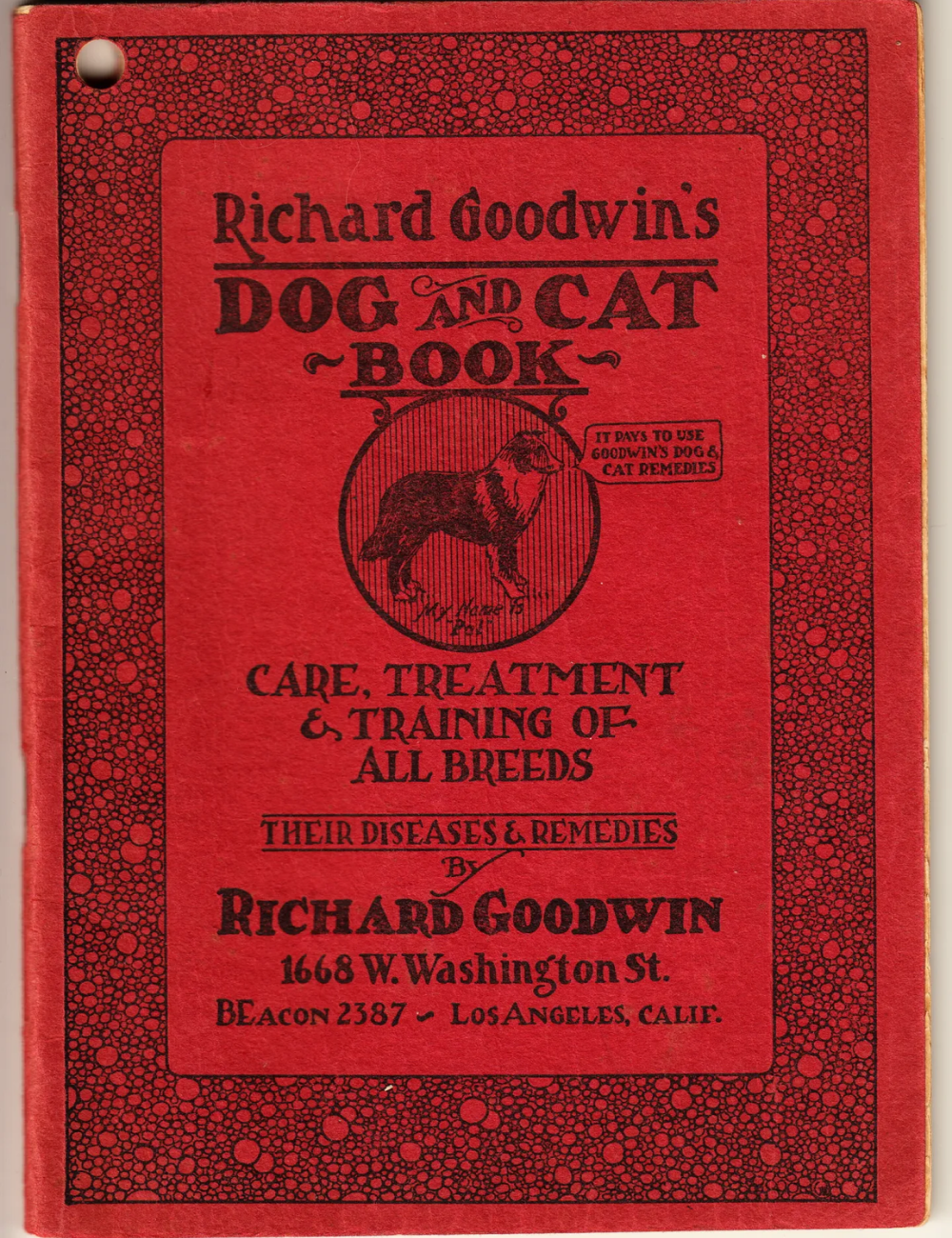
But first, let’s go back in time a bit. In the very early 1900s, there was a man named Richard Goodwin. He was popular amongst the veterinarian and pet health community in Los Angeles, California for being a self-proclaimed “dog specialist.” ¹ While he never had any formal veterinary training or education, he wrote some articles and booklets that gives us a glimpse as to what common pet first aid was like during that time. In 1927, he published his book titled, “Richard Goodwin’s Dog & Cat Book. Care, Treatment, & Training of All Breeds.

Richard Goodwin's Dog and Cat Book. Published in 1927.

At this time, he was in a group of small businessmen that consisted of pharmacists, dog breeders, early veterinarians, and young practitioners, all of whom created their own over-the-counter medicines for pets. ¹ These people published many articles in newspapers and advertising booklets during their time. Their informational works suggest that people were concerned and dealing with a wide variety of issues such as mange, worms, digestive diseases, and infectious diseases like distemper. ¹ The most common “remedies” that people turned to to ease these ailments for dogs were tonics and “blood builders”. You also would most likely have seen people use flea powders and kennel disinfectants that used carbolic acid which was used to clean human sickrooms. ¹

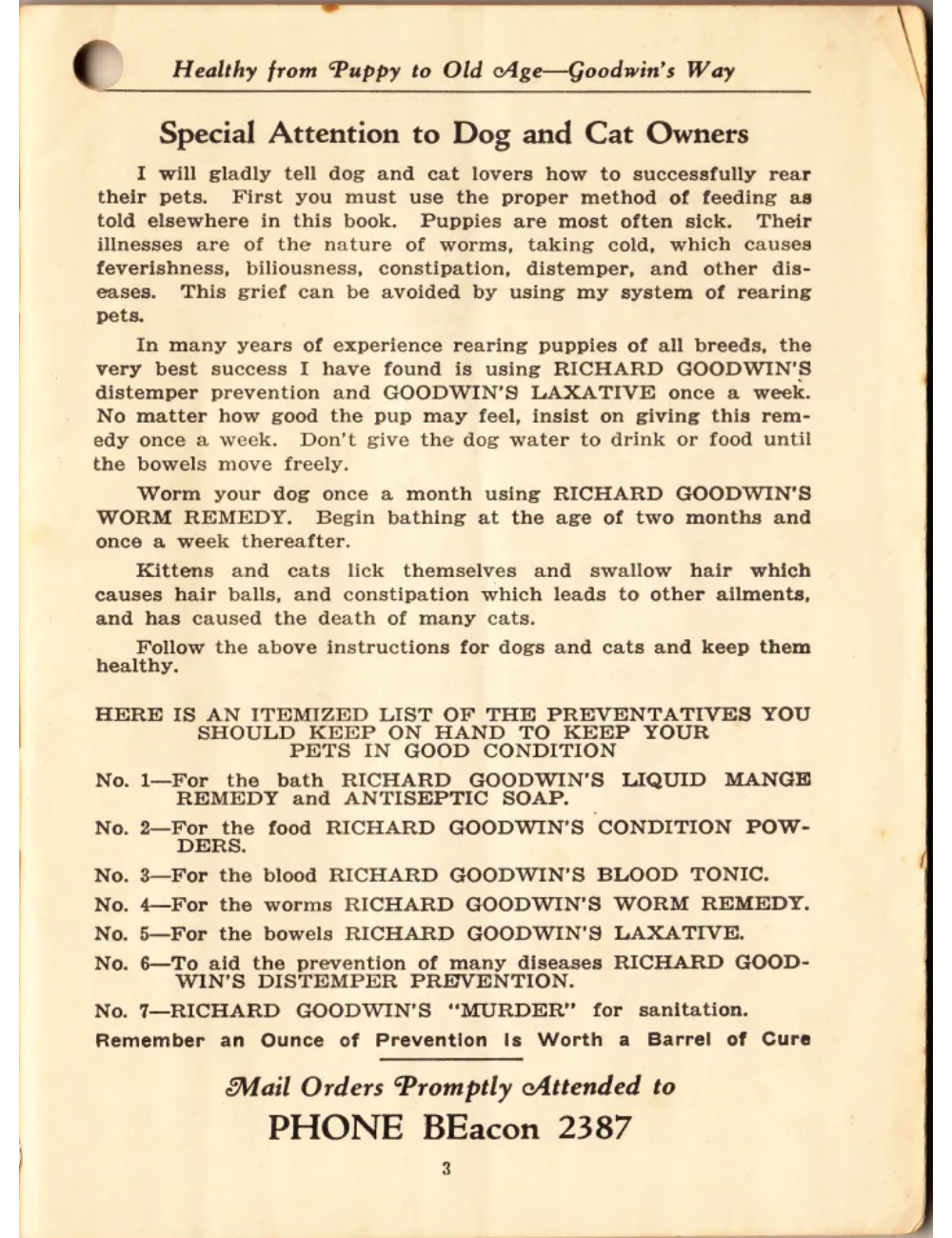
In Richard Goodwin’s book, he suggested keeping seven preventatives at home for pets:

Page 3 of Richard Goodwin's book.

“No. 1 – For the bath Richard Goodwin’s Liquid Mange Remedy and antiseptic soap.

No. 2 – For the food Richard Goodwin’s Condition Powders.

No. 3 – For the blood Richard Goodwin’s Blood Tonic.

No. 4 – For the worms Richard Goodwin’s Worm Remedy.

No. 5 – For the bowels Richard Goodwin’s Laxative.

No. 6 – To aid the prevention of many diseases Richard Goodwins Distemper Prevention.

Now, the formulas for these remedies and tonics are unknown. However, some of their names tell us that common medicines for pets in the early 1900s weren’t far off from what veterinarians recommend today: dewormers, laxatives/hairball remedies, and antiseptic soap.

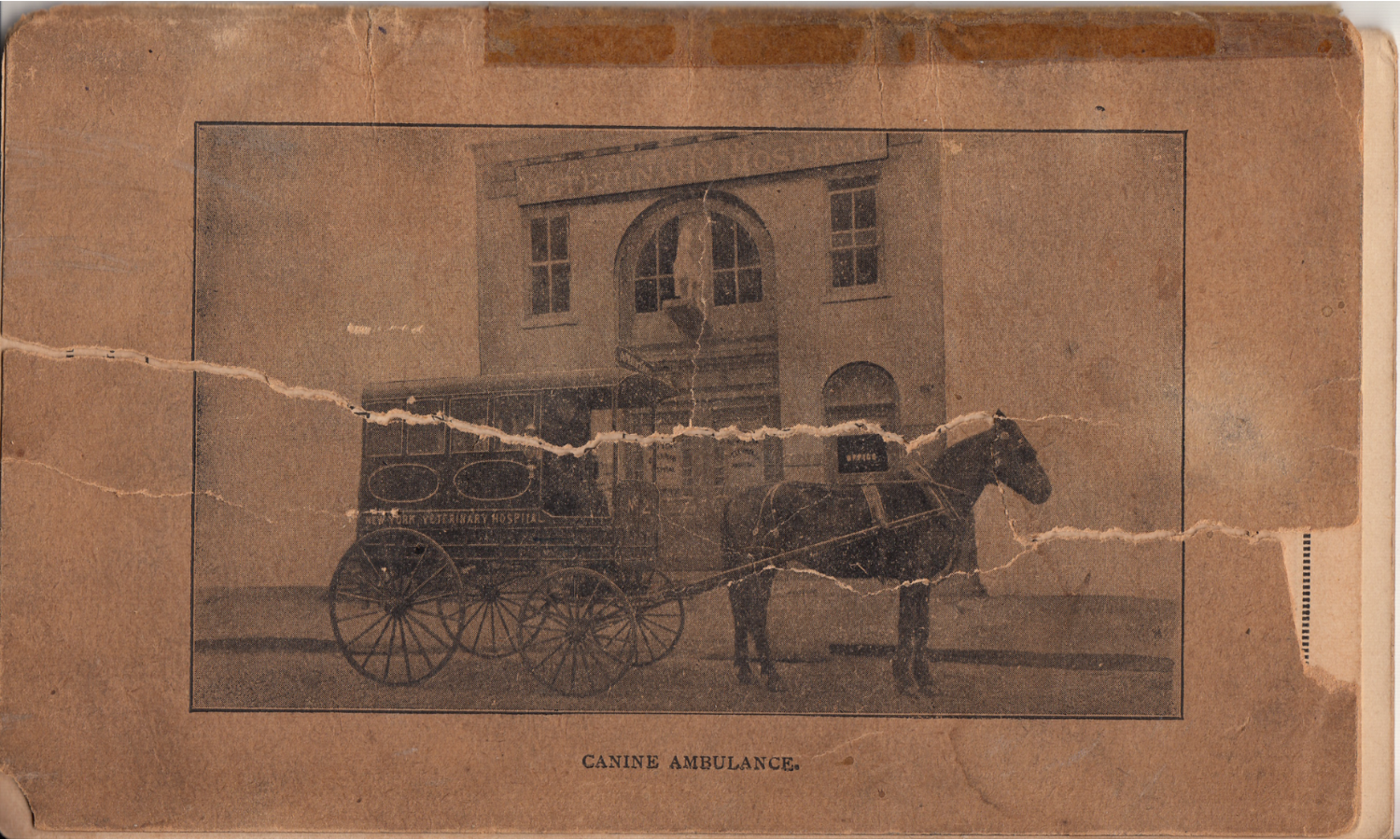
Another fascinating glimpse into early pet health is a booklet titled, “The Dog. Management in Health, Treatment in Disease” written by Dr. Samuel King Johnson, the first official veterinarian of the state of New York and of New York City. He was born in 1854 and died in 1937 and had practiced veterinary surgery for over 50 years in New York. ² He was dedicated to helping make medicine and first aid for pets accessible for the commonfolk. On the back cover of his book is a photograph of a horse drawn carriage titled “Canine Ambulance.” This carriage was able to pick up sick and/or injured animals from the homes of pet owners that had no means of transportation. ³

"Canine Ambulance" of Dr. Samuel King Johnson's book.

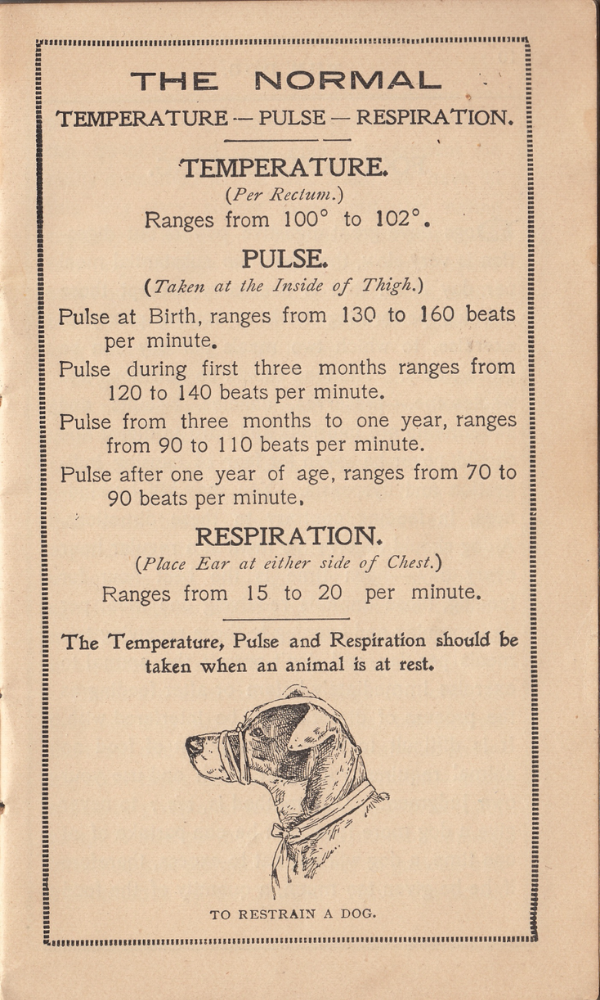
He also wrote measurements that were very important for any dog owner to know that helped them evaluate their sick pet:

Temperature (per rectum): Ranges from 100° to 102°.

Pulse (taken at the inside of thigh):

-Pulse at birth, ranges from 130 to 160 beats per minute.

-Pulse during first three months ranges from 120 to 140 beats per minute.

-Pulse from three months to one year ranges from 90 to 110 beats per minute.

-Pulse after one year of age ranges from 70 to 90 beats per minute.

Respiration (place ear at either side of chest): Ranges from 15 to 20 per minute.

"The Normal Temperature, Pulse, Respiration" of Dr. S.K. Johnson's book.

But looking back now, veterinary medicine and pet first aid has come a long way. Especially with the advancement of modern medicine. As technology became more accessible, so did the internet. Today, people are able to access hundreds of articles online all about pet first aid. Including the American Veterinary Medical Association’s article about First Aid Tips for Pet Owners. In this article, they explain how not only to protect your pet, but also yourself. When animals are in pain, their behavior can become unpredictable. Your pet can become confused and fearful. So, using these tips can help you keep yourself safe so you can help your pet better:

  • Avoid any attempt to hug an injured pet.
  • Keep your face away from your pet’s mouth.
  • Apply a muzzle if your pet threatens to bite.
  • Whenever possible, as other people to help you move your pet.

Now that you know how to keep yourself safe, let’s learn how to help your pets.

A number one safety concern for pets worldwide is poison. Pets can become curious and get into things they shouldn’t like cleaning products, certain plants, and certain foods. To prevent your pet from ingesting or coming into contact with something they shouldn’t, make sure to keep all potential poisonous items out of reach. Consider keeping things on the top shelf, storing things in bins with lids, or using safety locks on cabinets. However, if they do come into contact with a toxic product such as a cleaning product, always check the label first. If the label tells you to wash your hands with soap and water if you’re exposed, then wash your pet’s skin with soap and water. If the label tells you to flush the skin or eyes with water, then do so as soon as possible and then call a veterinarian immediately. If your pet has ingested something toxic or harmful, call your veterinarian, an emergency vet clinic, the Animal Poison Control Center Hotline (888-426-4435) or the Pet Poison Helpline (855-765-7661) straight away. Make sure to have the following information available before calling:
  • Species, breed, age, sex, weight, and number of animals involved
  • Symptoms
  • Description of the substance they ingested, the amount they were exposed to, and how long it’s been since they ingested it
  • The product container/packaging

It is always extremely wise to research and know what food items are toxic to your pet, just in case they sneak something off of your plate during mealtimes.

Most people know CPR. But most people only know CPR for humans, not animals. Knowing how to perform CPR on your pet could save their life.

From the American Red Cross, here is how to perform CPR on a dog or cat:

1. Check for breathing and a heartbeat

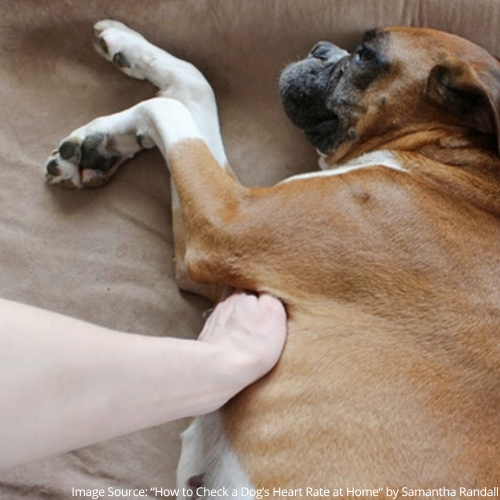
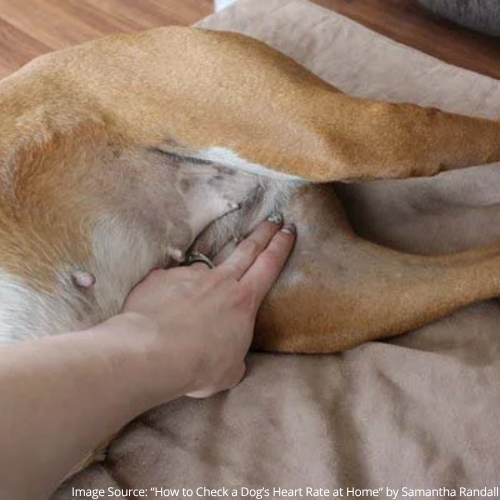
• If you do not see your pet’s chest moving and cannot find a heartbeat, begin CPR with chest compressions. To find a pulse on a dog or cat, place two fingers on the inside of the hind leg at the top of the thigh. Or place your hand on the left side of their chest, just behind the elbow.

IMPORTANT

Only perform CPR on a pet that is not breathing and is unresponsive. Also only if you have someone that can drive you and your pet to the nearest vet while you perform CPR.

2. Give chest compressions

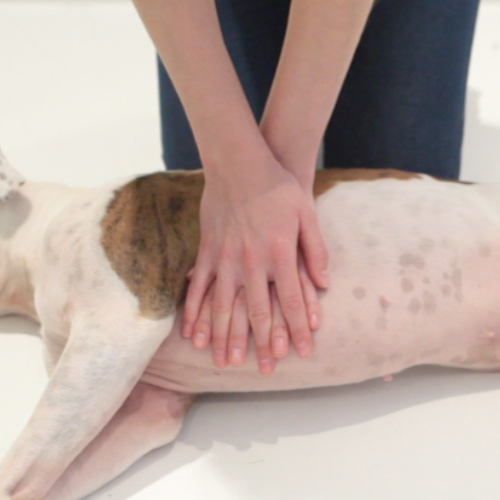
• When giving chest compressions make sure your hands and body are positioned correctly: your hands should be on top of each other and if you are performing CPR on a medium to larger pet, your shoulders positioned directly over them.

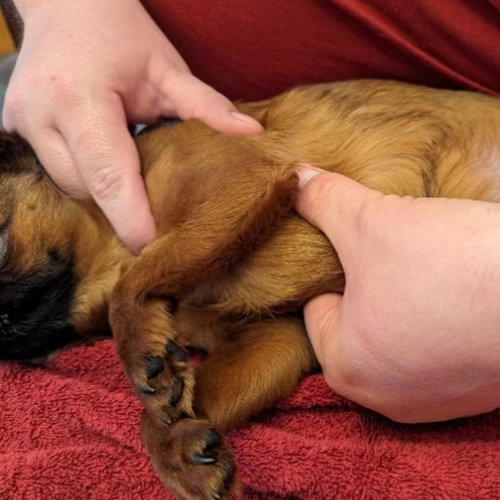
-For cats and small dogs: place your hands over their heart.

-For deep chest dogs like Great Danes, Dachshunds, and Basset Hounds: place your hands over the widest part of their chest.

-For barrel chested dogs such as Bulldogs, American Pitbulls, and Pugs: place your hands over the widest part of their sternum.

Hand positioning on dogs & cats 15lb or less
Hand positioning for medium to large dogs & cats over 15lb

• Locking your elbows (if not performing CPR on small animals), give strong and firm compressions at a rate of 100-120 per minute, or to the beat of the song Stayin’ Alive by the Bee Gees. Make sure that your pet’s chest is fully coming back up after each compression.

• Perform 30 chest compressions and pause.

3. Give rescue breaths

• Gently close your pet’s mouth and extend their neck to open the airway.

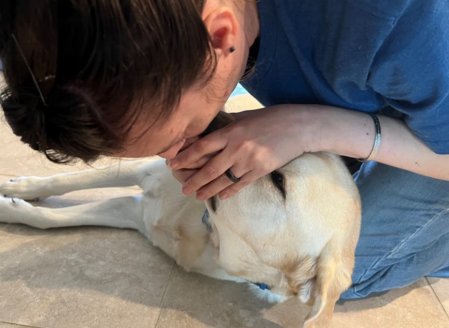
• While holding their mouth closed, cover your pet’s nose with your mouth and exhale until you see your pet’s chest rise.

• Do this for one more breath.

Mouth to mouth position

4. Cycle through 30 chest compressions and then 2 rescue breaths until your pet is able to breathe on their own. Check for breathing and a heartbeat every 2 minutes.

Now that you know the basics of CPR and poison prevention, there are many courses and guides online that you can use to learn more about how to keep your pets safe. Here are a few good free resources that we recommend:

Dog Choking Prevention Course Link

First Aid Introduction Link

First Aid Courses Link

Pet First Aid Infographic Link

Sources:

1: The Pet Historian, “Richard Goodwin: The Dog Specialist Part II” Link

2: The New York Times, “Dr. Samuel Johnson, A Founded of S.P.C.A; Practiced Veterinary Surgery Here for Half Century–He succumbs in Greenwich” Link

3: The Pet Historian, “The New York Veterinary Hospital, 1900: An Early Small-Animal Practice” Link

4: American Veterinary Medical Association, “First Aid Tips for Pet Owners” Link

Share this post

mounds icon

About Mounds

Mounds Pet Food Warehouse is an employee-owned and locally operated pet food and supply company with 4 Wisconsin locations. Keep up with our blog for the latest Mounds, pet and pet product updates.

MORE POSTS

Pet Dental Month

The Benefits of Puzzles

The Frequent Buyers Program