With winter in full swing, it’s important to not only make sure we stay warm ourselves, but also our pets and the animals in our community. We decided to share some tips and information for navigating the cold weather and what you can do to help your furry friends.
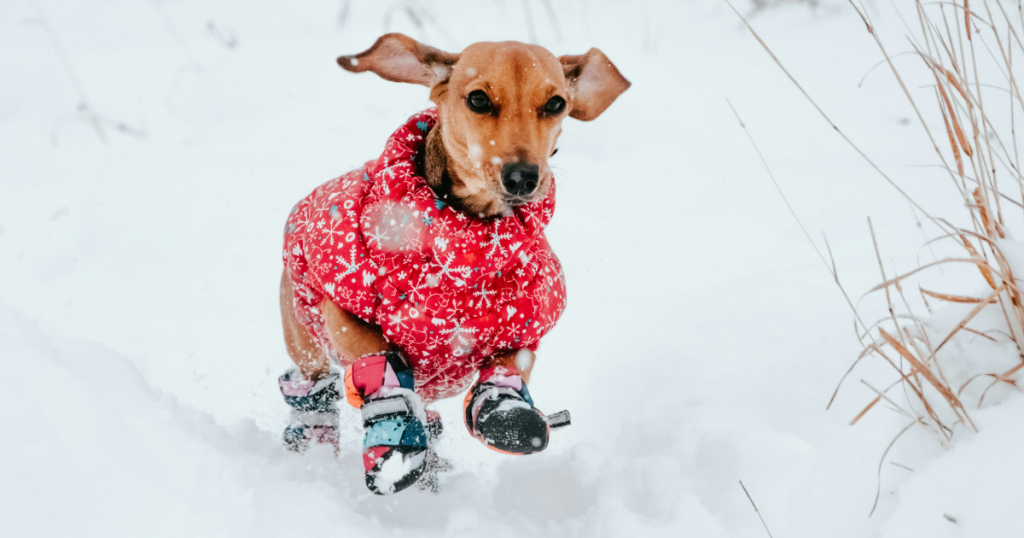
With cold weather, comes dry air and ice. Many folks use standard salt on sidewalks which can irritate your pet’s paws. When taking your pet for a walk, consider putting them in some booties to protect their paws from the snow, ice, and salt. Your pet’s paws will also be protected from any small sharp objects like rocks or chunks of ice.
If your pup is squirmy or despises boots, you can also use petroleum jelly or other paw protectants. This will not only help protect their paw pads from sidewalk salt, but also keep them moisturized to prevent cracking or itchiness.
In addition with using an ointment or moisturizer to protect their paws, it’s also a good idea to wipe their paws down after going outside. Due to the salt and other ice-melting agents, there can be chemicals on sidewalks that are harmful to pets as they lick their paws. Wiping down their paws also gets rid of any irritants. This can look like simply using a warm washcloth with a mild soap, or you can use products specially made for cleaning pet’s paws.
It’s also important to towel dry pets after they come inside if they have any snow on their fur. A pet with dry fur is much easier to warm up than one with wet fur!
Now that the days are getting shorter, it’s almost dark by the time most of us get home from work. To keep our pets safe when walking them in the evenings, use a reflective vest or lights around their collar.
If your pets are primarily outdoor pets, such as working dogs, consider adding some more calories into their diet for the winter. Just like us, pets burn energy trying to regulate their body temperature. You can add toppers into their meals like bone broth or freeze-dried bits of their favorite meat. Or you can even add an extra scoop of kibble. This will help them replace the calories that they’re burning while trying to stay warm.
Never let your dog off leash during the winter and try to keep your cats inside. With the snow, animals can lose their scent easily and get lost. It’s very important that you are able to keep a close eye on your furry friends, especially when the temperature drops.
If your dog is having troubles going potty outside due to the snow, consider laying straw down in a designated area of your lawn if you’re allowed to. Straw doesn’t absorb moisture very well so it will stay dry for longer acting as a barrier from the cold wet snow beneath. If you’re not able to lay straw down, you can shovel a patch of snow away to make it easier for your pets.
It is extremely important to know the signs of hypothermia, not just in humans but in animals too. If you notice that your dog or cat is shivering, showing signs of weakness or lethargy, and has a decreased heart rate, warm them up immediately. Make sure they are completely dry before wrapping them in blankets. If your pet’s fur or skin is wet from snow or ice, the blanket will just absorb that moisture and become a cold wet blanket. It is also a good idea to contact your vet and look up where an emergency vet is located in your area.
During the winter, our pets are more susceptible to boredom due to staying inside longer than usual. To keep your pets entertained and not jumping off your walls, try a puzzle or a new toy with them. This also engages their brain and keeps them mentally strong.
Winter can be very challenging to manage. Between shoveling, icy roads, cold temperatures, it’s easy to dislike winter. But with the right preparations, winter can be a magical time. We hope this article helps make the cold weather a bit easier on you and your pets!