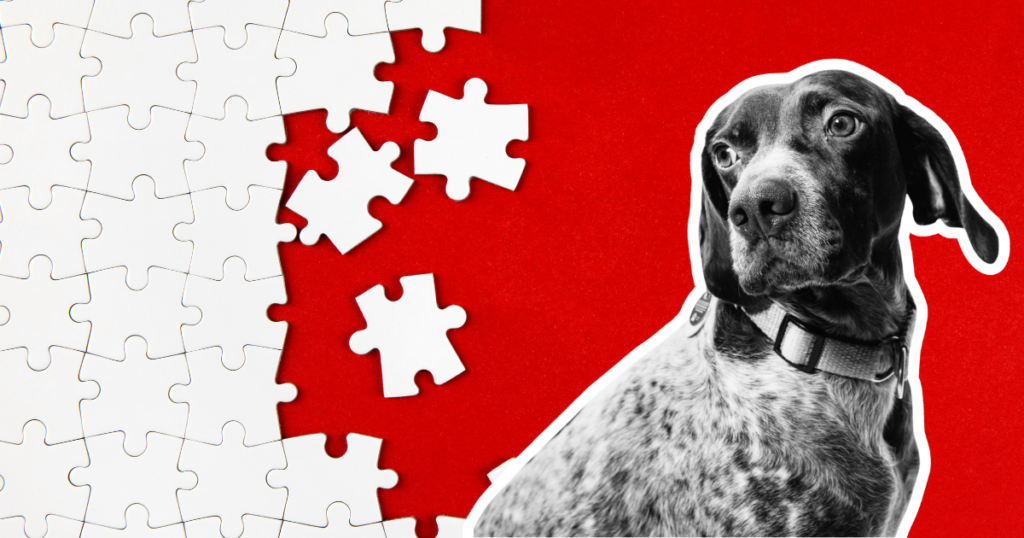
Just like humans, animals need enrichment too. Puzzle feeders have been shown to be a great tool in helping to maintain the cognitive and physical health of our pets.
A study done by the National Library of Medicine about the benefits of puzzle feeders for cats, showed that not only did it help overweight cats lose some pounds, but it also helped reduce and even solve problem behaviors.
Cat | Concern(s) | Treatment(s) | Benefit(s) |
|---|---|---|---|
11 year old neutered male | Obesity | Puzzle Feeders | Lost 6.4% of body weight in 3.5 months with an increase in mobility |
6 year old neutered male | Obesity | Puzzle Feeders | Lost 11% of body weight in 12 months |
7 year old & 1 year old neutered males | Younger cat playing too rough with older cat | Puzzle Feeders & clicker training | Cats played with puzzle feeder together; altercations between the two decreased drastically |
Two 3.5 year old neutered males | Meowing for food waking owner up | Puzzle feeders | Slowed down their eating and showed a decrease in meowing for food |
Another study that researched the benefits of enrichment feeding for pet dogs was the first known study done that focused solely on domesticated dogs. The University of Liverpool in Neston, UK released a cross-sectional survey in 2021 that received 1,750 usable responses. These responses included valuable information regarding owner and dog demographics, feeding methods used, canine quality of life, and behavior. The study revealed that Kongs, chews, and activity toys were the most popular forms of canine enrichment feeding (CEF). 98.2% of respondents either somewhat or strongly agreed that CEF provided mental stimulation. 96% of them also thought CEF was a good way to prevent boredom. And 89.4% of them thought it provided the owner with enjoyment as well shown in a quote taken from their survey: “I’ve found it can be just as much fun for me to create and watch him eat as it is for him to eat in new and interesting ways.”
Various respectable sources have said that brain games and puzzle feeders for pets can not only benefit the integrity of your couches, but also your pet’s own safety. The American Kennel Club as well as the Toronto Humane Society explained that enrichment feeders can be helpful for when pets are home alone, if they have an injury or illness and can’t stay active, or if you need to keep a pet away from something. Dogs and cats are naturally curious creatures, which means they can get into trouble if they don’t have a sufficient amount of mental stimulation. They become bored which leads to chewing, digging, scratching, and other unwanted or troublesome behaviors.
Providing your pets with the right amount of enrichment can also help delay cognitive decline as they age. In the first study mentioned done by the National Library of Medicine, it was revealed that a senior cat, diagnosed with cognitive dysfunction syndrome, was experiencing disorientation. After puzzles were introduced to the cat, there was a noticeable decrease in its symptoms which ultimately allowed them to avoid the introduction of medication.
But puzzle feeders don’t just affect cats and dogs. It can affect almost every animal that is in captivity. Whether that’s domestic birds, small animals like rabbits and guinea pigs, and even fish.
Feather plucking has been commonly seen in domesticated birds, specifically parrots. As reported by the Otto Environmental Solutions for Animal Care, parrots are natural decision makers, meaning they enjoy exploring and manipulating objects. Often times, because they are in captivity, they can resort to harmful behaviors to try to self soothe or prevent boredom. In the article, a study by Cambridge University was referenced. It showed evidence that providing enrichment devices to encourage foraging helps to keep parrots mentally engaged which in turn reduces excessive feather plucking.
Similarly to birds, other small animals like hamsters, ferrets, rabbits, rats, and guinea pigs, are all natural foragers. However, their foraging time and mental stimulation has been drastically decreased due to domestication. A few causes of insufficient enrichment levels in small animals is pacing, excessive biting/chewing, and lethargy. If gone untreated, these will lead to obesity, damaged teeth, muscle strain, and a reduced life expectancy.
So you’d like to add some enrichment into your pet’s life? Great! There are many different ways to keep your little friends entertained and their brains strong.
Cats:
Slow feeders can be used to combat obesity. They can also be used to slow down fast eaters who are prone to throwing up soon after they eat.
To best introduce slow feeders, start with giving them part of their meal in their normal bowl and the other part of their meal in the new slow feeder. Gradually increase the amount of food in the slow feeder and decrease the food in the normal bowl. This can help them get used to the new feeder, especially if they have eaten from the same type of bowl for a long time. An abrupt change can confuse them and sometimes cause frustration.
Most people prefer to give their pets puzzles, which is a fun and exciting way to work your pet’s brain. To set you and your cat up for success, it’s important to have patience. Start slow and don’t worry if they can’t figure out the puzzle on the first try. Start with an easy puzzle that is meant for beginners and adjust the amount of food or treats inside so that getting the food is easy until your cat gets the hang of it. Mobile puzzles like feeder balls that they can bat around are good for helping them lose weight and really work for their food. Although, it’s important to note that these only work for dry food. If your cat’s weight is healthy, but they are in need of enrichment, consider a stationary puzzle. This can look like a plastic puzzle that has little compartments and sliding aspects, that usually stays in one place. For these, you can use both dry and wet food.
Sprinkling some food or treats around the puzzle can help confused cats get a better understanding of what it is they’re meant to do.
Another option that is more accessible is to just switch it up! Many cat owners are aware that most cats become incredibly interested in anything new, especially garbage. Whether that’s a paper bag, plastic bag, a receipt, even temporarily rearranging the furniture can entice your cats. Start by getting your cat’s attention, then place or toss something on the ground that normally doesn’t belong there. They will investigate and try to figure out what this strange new object is. They might even start to play with it or bat it around. But, be sure to always supervise your cats when giving them something, especially if you’re unsure on how they’ll react.
You can also try hiding their toys, and only bringing out a few at a time and rotating between them. This keeps them interested because you are taking away the possibility of them getting bored of playing with the same toy every day.
We all know that putting on a show with colors and shapes can keep babies entertained. The same thing is true for cats! Search up “cat enrichment videos” on the internet and choose one that you think your cat would be interested in. Then, plop them in front of the screen and watch their eyes dart all across the screen. But be careful, they might bat or swat at the screen so watch out for those nails! After, give them a physical toy to prevent them from becoming frustrated due to there being no physical catch.
Dogs:
Just like for cats, dogs can also receive the same benefits from using a slow feeder: lose weight, slow down those pups that can often times throw up from eating too fast, and it can work their brain.
Puzzles can be a great way to exercise your dog’s brain and slow down mental decline as they age. There are a wide variety of puzzles to choose from that will best fit your pet’s experience with them. If your dog has learned the ins and outs of a puzzle, instead of letting it collect dust, try putting small objects in the puzzle to make it harder for them to get the treat.
Putting on a little scavenger hunt can be a simple and inexpensive way of providing enrichment for your pets. All you have to do is take one of their favorite toys and hide it somewhere around your home. If they are having difficulties finding the toy, try squeaking it if it has a squeaker, or gently guide them in the right direction to the toy.
According to the Animal Humane Society, going on “sniff walks” can also be more beneficial than one might think. It’s no secret that dogs LOVE to smell things and are always poking their snouts in every nook and cranny. Sniff walks are slow paced walks that let your pup sniff and smell all of the different things outside. Literally stopping to smell the roses! Because dogs see the world primarily through their nose, which is their strongest sense, letting your dog stop and sniff on walks supports their desire to explore and learn more about the world around them. Lauren Fries, the Animal Humane Society’s Shelter Behavior Services Supervisor, says “giving dogs the opportunity to sniff can be just as enriching as physical exercise and is an important part of providing well-rounded enrichment for your dog.”
Small Animals:
Dogs and cats aren’t the only ones that can use puzzle feeders. You can buy small animal puzzles from the store, or you can make your own at home! Simply take an empty cardboard tube from toilet paper or paper towel and cut small holes in it. Then stick whatever treat or snack your little friend loves inside! This works best with hay or other foods that you can stuff.
Did you know… Ferrets love puzzles! Some dog and cat puzzles can be a very enriching toy for ferrets.
Like dogs, most small animals use their sense of smell as their primary tool to navigate the world around them. However, you’re probably not going to see a hamster or rabbit going for a walk outside, which means they can become irritable from the lack of enrichment. To help tap in to their natural instinct to forage, try spreading their food all over their enclosure, or hide some treats in hay or their bedding for them to find.
Chew toys for small animals like hamsters and rats can help in both providing enrichment and dental health. The various flavors and textures of chew toys offers different sensory experiences for your tiny friends, as well as helping to maintain the length of their teeth.
Adding different accessories to their enclosure can give them extra exercise that they might not have gotten, overall maintaining a healthy weight. Consider putting their food or snacks in a hanging position to encourage them to stand upright and stretch their muscles. Tunnels, tubes, and things they can climb are also great ways to give them some more exercise and give them mental enrichment.
BIRDS:
Birds love treats, so hiding their treats gives them an extra challenge when it’s snack time. Try creating your own foraging bowl! Take a small bowl and fill it with shredded paper, popsicle sticks, large buttons, and/or any other small object and scatter some treats inside.
Most birds are very social creatures. The simple act of reading a children’s book to them or singing a song with them can boost their relationship with you and increase their enrichment.
Rearranging their enclosure every once in a while can offer them a new environment to work with. Rotating between toys and introducing new textures into their life creates variety and helps them from becoming bored.
Making sure your pet has the necessary levels of enrichment increases their life span, letting you enjoy their company and cuddles for longer. So, try out something new with them and let us know how it goes!
Helpful Links & Resources Referenced:
American Kennel Club, “Brain Games for Dogs: When Can a Puzzle Be The Solution?” Link
Toronto Humane Society, “The Importance of Mental Stimulation: Games and Puzzles for your Pets” Link
National Library of Medicine, “Food Puzzles for Cats” Link
University of Liverpool, “Bowls are boring: Investigating enrichment feeding for pet dogs and the perceived benefits and challenges” Link
Otto Environmental Solutions for Animal Care, “Animal Enrichment” Link
Marriottsville Animal Hospital, “Pet Enrichment Tips” Link
UK Pet Food, “Feeding Enrichment for Small Mammals” Link

Rose
Full time cat lover (and Mounds employee).